Silicone Baby Fork & Spoon Set for Easy Self-Feeding
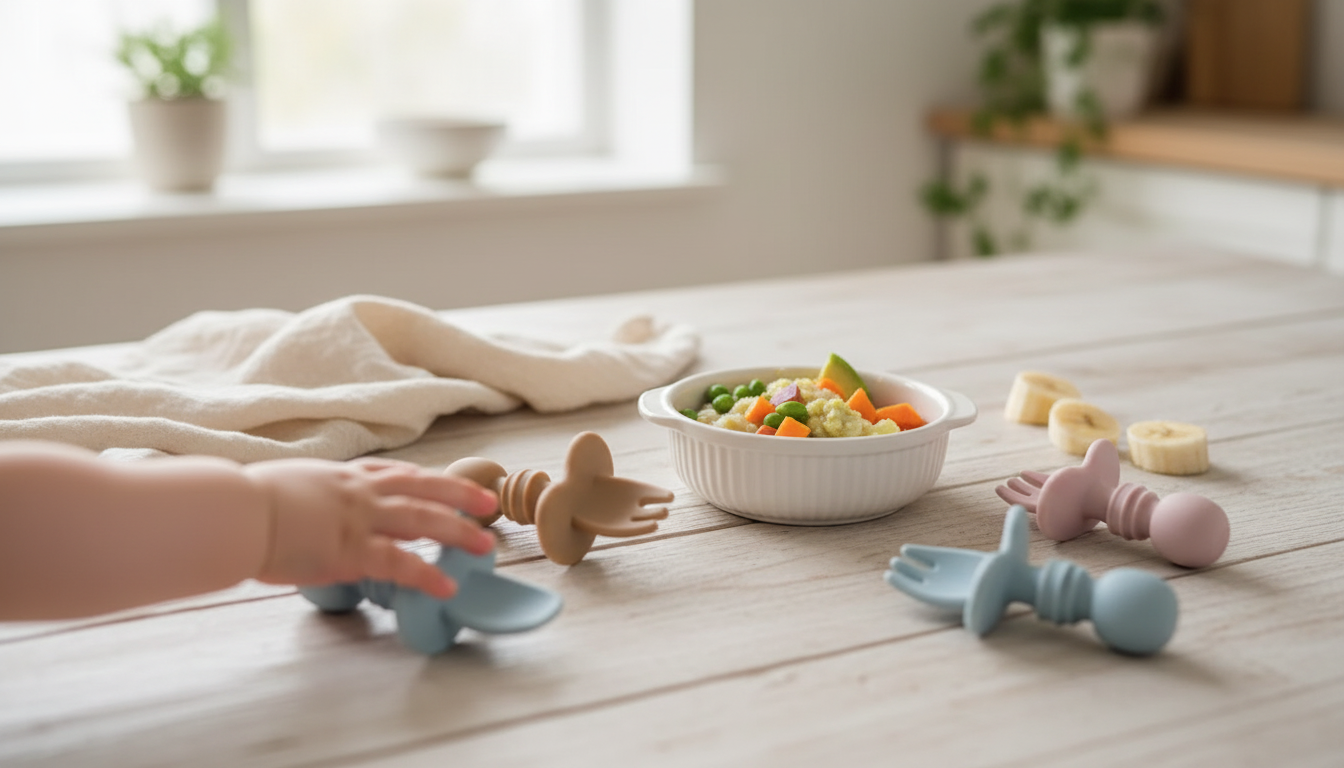
Silicone Baby Fork & Spoon Set: A Simple Step Toward Confident Self-Feeding
A small utensil upgrade can make a big difference during the messy middle stage between being spoon-fed and eating independently. A silicone baby fork and spoon set is designed to be gentle on gums, easier to grip for tiny hands, and simpler to clean after purees, mash, and first finger-foods. For many families, it’s one of those quiet, everyday tools that helps mealtimes feel a little more manageable while baby practices real skills.
What Makes Silicone Utensils Baby-Friendly
Baby utensils look simple, but the material and shape can noticeably change how practice feels—especially during teething and early coordination.
- Soft, flexible edges that are kinder to sensitive gums during teething.
- Non-slip feel that can help reduce slipping and sudden pokes.
- Lightweight design that supports early hand-to-mouth coordination.
- Quieter at the table than metal when tapped on bowls or high-chair trays.
- Helpful for scooping practice with thick purees and soft foods that “stick” better than thin liquids.
When to Introduce a Fork and Spoon
There isn’t one perfect day to hand over utensils. Readiness tends to show up in small signals—often well before baby can reliably get food into their mouth.
- Early practice: offer utensils alongside finger foods so baby can explore grip and tapping without pressure to “perform.”
- Spoon readiness cues: bringing objects to mouth, showing interest in copying, and managing thicker textures (like oatmeal or mashed veggies).
- Fork readiness cues: grasping with more control and beginning to spear or rake very soft pieces (banana, avocado, well-cooked pasta).
- Supervision still matters: utensils support skills, but they don’t replace attentive feeding and upright seating.
For general guidance on starting solids and safe feeding progression, see the American Academy of Pediatrics resource on starting solid foods and the CDC’s overview of infant and toddler nutrition.
Quick Comparison: Silicone vs. Common Alternatives
If you’re choosing between materials, consider how the utensil feels on gums, how easy it is for small hands to hold, and how it holds up to daily washing. It also helps to match the utensil to the current food stage: purees and yogurt benefit from a gentle spoon edge, while soft solids benefit from a rounded, toddler-safe fork.
| Material | Comfort on Gums | Grip for Small Hands | Durability & Care | Best Use Stage |
|---|---|---|---|---|
| Silicone | Soft and gentle | Often grippy | Usually easy to wash; check heat limits | Early practice through toddler meals |
| Plastic | Varies; can be firm | Can be slippery | Lightweight; may scratch or stain | Occasional use; travel sets |
| Stainless steel (toddler-safe) | Firm; can feel cold | Depends on handle design | Very durable; dishwasher-friendly | Older toddlers with good control |
| Bamboo/wood | Moderate; can feel smooth | Good when contoured | Hand-wash often recommended; can absorb odors | Gentle introduction; lower-mess foods |
Safety and Care Checklist
Even baby-friendly utensils need regular check-ins. A few quick habits can keep self-feeding practice safer and more pleasant.
- Confirm age-appropriate design: rounded edges, baby-sized proportions, and an easy-to-hold handle.
- Inspect often: look for tears, deep nicks, or damage that could trap residue; replace if compromised.
- Wash thoroughly after clingy foods: yogurt, nut butters, and oily purees can hang onto surfaces.
- Follow heat and cleaning guidance: dishwasher use, boiling, or sterilizing limits can vary by item.
- Store fully dry: helps prevent odors and keeps the silicone surface fresh.
- Keep baby upright and supervised: utensils support skills; safe posture and attention do the rest.
For extra peace of mind about materials used in food-contact items, the U.S. FDA explains how food contact substances are regulated and evaluated.
How to Use a Baby Fork and Spoon Without Frustration
Early utensil practice can look chaotic, but small adjustments make it easier for baby to succeed—and easier for you to stay patient.
Product Pick: Silicone Baby Fork & Spoon Set
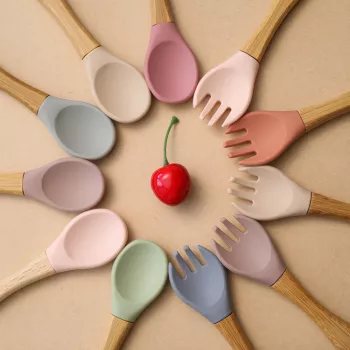
If you want a simple, budget-friendly option for everyday meals and skill practice, the Silicone Baby Fork & Spoon Set is an easy place to start. It’s a straightforward two-piece set designed for early self-feeding exploration—useful at home, in a daycare bag, or as a backup set in the car.
At-a-Glance Details
| Item | Price | Availability |
|---|---|---|
| Silicone Baby Fork & Spoon Set | $5.17 | In stock |
If a Full Feeding Set Is Needed
For a more coordinated mealtime setup, consider the 6PCS Baby Feeding Bowl & Utensil Set, which can help keep a consistent routine (same bowl shape, same utensil feel) while baby practices day after day.
FAQ
Is silicone safe for baby utensils?
Food-grade silicone is commonly used for baby feeding items because it’s designed to be non-toxic and gentle on mouths. Follow the manufacturer’s care instructions, and replace utensils that are torn, deeply nicked, or damaged.
When can a baby start using a fork and spoon?
Many babies can start exploring utensils around the time they begin solids, often in the 6–9 month range, but readiness varies. Look for cues like bringing objects to the mouth, improving grip control, and showing interest in self-feeding, and always supervise with baby seated upright.
How do you get silicone utensils to stop holding odors?
Wash thoroughly, rinse well, and let the utensils dry completely before storing. If the item’s care guidance allows, an occasional soak with baking soda and warm water can help; heavily stained or damaged silicone may need replacement.










Leave a comment