Montessori Wooden Animal Puzzle for Toddlers (Ages 1–3)
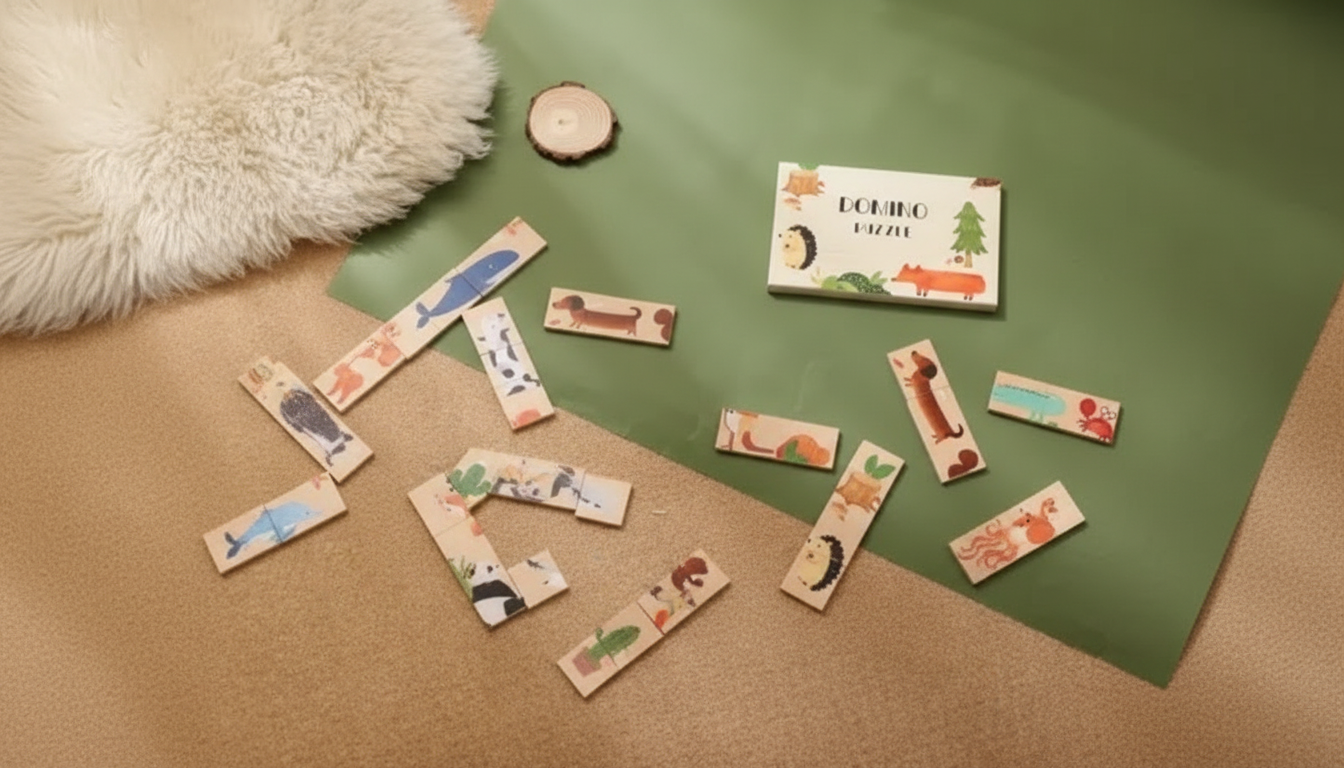
Montessori Wooden Animal Puzzle Set – A Hands-On Learning Toy for Babies and Toddlers
A simple wooden puzzle can do a lot: invite focus, encourage tiny hands to practice purposeful movements, and build early problem-solving through play. This Montessori-style animal puzzle set is designed for babies and toddlers to explore shapes and familiar animals at their own pace, with durable wood pieces that feel good to hold and easy-to-grasp puzzle parts that support independent learning.
What Makes This Puzzle Set Montessori-Inspired
Montessori-aligned toys tend to be calm, practical, and built around meaningful repetition. A wooden animal puzzle fits that approach because it gives a clear goal (match each animal to its space) without distracting lights, sounds, or extra steps.
- Self-correcting play: pieces fit in only one way, helping children learn by trying.
- Purposeful simplicity: clear animal shapes without overstimulation.
- Hands-on discovery: encourages attention, repetition, and independent practice.
- Real-world connections: animal recognition builds early vocabulary and categorization.
For a broader look at choosing safe, age-appropriate toys, the American Academy of Pediatrics shares helpful guidelines that pair well with a simple, screen-free puzzle like this.
Skills Babies and Toddlers Build Through Animal Puzzles
Animal puzzles support multiple developmental areas at once because children aren’t just “matching pictures”—they’re coordinating hands, eyes, and attention while practicing persistence. Many of these skills line up with typical early milestones tracked by the CDC, especially around grasping, problem-solving, and early language.
- Fine motor control: grasping, lifting, rotating, and placing pieces.
- Hand–eye coordination: aligning shapes with the correct slots.
- Early problem-solving: testing and adjusting when a piece doesn’t fit.
- Language development: naming animals, sounds, colors, and describing actions.
- Concentration and patience: short, repeatable challenges that feel achievable.
| Skill area | What the child practices | Easy parent prompt |
|---|---|---|
| Fine motor | Pinching, turning, controlled placement | “Use two fingers to lift it.” |
| Hand–eye coordination | Matching angles and edges | “Turn it until it lines up.” |
| Cognitive skills | Trial-and-error, memory, sequencing | “Which one goes here?” |
| Language | Animal names, sounds, descriptive words | “What animal is this? What sound?” |
| Social-emotional | Persistence, confidence, calm focus | “Let’s try again—slowly.” |
Age Guidance and What to Look For at Each Stage
The same puzzle can stay interesting as your child grows—what changes is how you present it and what you expect during play. Developmentally appropriate practice is all about meeting children where they are; the NAEYC explains why simple, hands-on activities matter in the early years.
- 6–12 months (supervised): explore textures, practice grasping and transferring pieces hand-to-hand.
- 12–18 months: begin matching one or two animals with help; celebrate attempts rather than speed.
- 18–24 months: encourage independent matching and naming; introduce “find the animal” games.
- 2–3 years: add simple challenges like sorting by animal type, telling a short story, or copying a sequence.
If frustration shows up, reduce the number of pieces available and slow the pace. A calm reset often turns a “no” day into a confident “I did it!” moment.
Play Ideas That Keep It Fresh (Without Making It Harder)
Rotating the way you present the puzzle can keep interest high while still protecting the Montessori-style simplicity. These ideas stay child-led and focus on the same core skill: matching with purpose.
- Three-piece start: offer only a few animals at a time, then rotate to maintain interest.
- Sound match: make an animal sound and let the child choose the matching piece.
- Hide and find: cover one piece with a cloth and ask which animal is missing.
- Story prompt: “The (animal) is going to sleep—can you tuck it into its spot?”
- Turn-taking: adult places a piece “wrong,” child corrects it to reinforce self-correction.
Safety, Materials, and Care Tips for Wooden Toys
- Supervise younger babies, especially if pieces are small enough to mouth.
- Check edges and finish regularly; discontinue use if pieces crack or splinter.
- Wipe clean with a slightly damp cloth; avoid soaking wood in water.
- Store dry and flat to help keep pieces from warping.
- Teach gentle handling: placing pieces is part of the learning, not just fitting them quickly.
A Practical Gift Choice for Early Learning
Wooden animal puzzles make an easy “yes” gift because they’re compact, durable, and useful across multiple ages. They also slide naturally into daily routines: a few minutes after breakfast, a calm activity before nap, or a quiet-time option while dinner finishes.
Montessori Wooden Animal Puzzle Set – Product Details and Where to Get It
If you’re looking for a straightforward, hands-on puzzle that supports early matching and language through familiar animals, the Montessori Wooden Animal Puzzle Set – Educational Toy for Babies & Toddlers is available now.
For simple routine support that pairs well with preschool readiness, consider the Preschool Drop-Off Survival Checklist | Morning Routine Guide | Printable Digital Download for Parents | Smooth School Transition Tips. And for a practical everyday item parents often appreciate, the 6PCS Baby Feeding Bowl & Utensil Set can complement an early-learning gift with something useful at mealtime.
FAQ
What age is a wooden animal puzzle appropriate for?
Many children enjoy simple wooden puzzles around 12 months and up, with supervised exploration possible earlier depending on piece size and mouthing. You can adjust difficulty by offering fewer pieces at a time and gradually adding more as matching becomes easier.
How can this puzzle be used in a Montessori way at home?
Place the puzzle on a low shelf, offer it as a choice, and let your child lead the pace. Demonstrate slowly once, then step back so your child can try, repeat, and self-correct without being rushed.
How should wooden puzzles be cleaned for toddlers?
Wipe the surface with a slightly damp cloth and dry it fully right away; avoid soaking wood or using harsh cleaners. Inspect regularly for chips, cracks, or splinters and follow any care instructions provided by the maker.









Leave a comment