Talking to Kids About Death: Calm, Clear Checklist

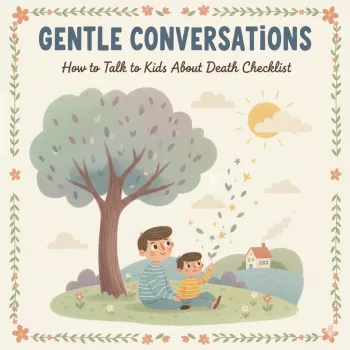
Gentle Conversations: A Practical Checklist for Talking to Kids About Death
When a child asks about death—or when a loss happens—caregivers often need simple, steady language and a clear plan for what to say next. The goal isn’t to have “perfect” words; it’s to offer honesty, comfort, and a sense of safety. Below is a practical, age-aware checklist to help families respond calmly, answer questions without overwhelming details, and keep support going in the days and weeks ahead.
What makes these talks hard (and why kids need clarity)
Children notice changes in routines and emotions quickly, even when adults try to shield them. When the story is vague, kids often fill the gaps with worries—sometimes blaming themselves or imagining something scarier than the truth. Using simple, direct language builds trust and reduces confusion.
It also helps to remember that grief in children often comes in waves: short bursts of big feelings followed by play, distraction, or even laughter. That shift can feel startling to adults, but it’s a common way kids pace their emotions. More than any single sentence, your calm tone and consistent message communicate safety.
For additional guidance from pediatric and mental health experts, see the American Academy of Pediatrics and the American Psychological Association.
Before the conversation: a quick readiness check
A little preparation can make a difficult moment feel steadier for both you and your child. Choose a quiet time with enough room for questions; if possible, avoid starting right before bed when worries can intensify. Decide what facts are known, what is not known, and how you’ll say “I don’t know” in a reassuring way.
Use clear words like “died” and “death” rather than euphemisms that can confuse children (for example, “went to sleep”). Expect repeat questions—repetition is one of the main ways kids process new information.
If the death involves violence, suicide, or substance use, plan a simple, truthful explanation matched to the child’s age and emotional readiness, without graphic detail. The NHS guidance on talking to children about death offers practical wording and reminders that align well with this approach.
Conversation setup checklist (printable-style)
| Step | What to do | Why it helps |
|---|---|---|
| Pick the setting | Sit together somewhere familiar; keep phones away | Signals safety and attention |
| Name the loss | Use clear terms: “died,” “death,” “body stopped working” | Reduces confusion and magical thinking |
| Share small facts | Give the basic what/when; avoid overwhelming details | Keeps the message understandable |
| Invite questions | Ask: “What are you wondering about?” | Lets the child lead the pace |
| Normalize feelings | Say: “It’s okay to feel sad, mad, or confused” | Supports emotional expression |
| Offer next steps | Explain what happens now (funeral, routines, caregiving) | Restores predictability |
What to say, by age: simple language that stays honest
Ages 2–4
Keep sentences short and concrete. A helpful script is: “They died. Their body stopped working. They can’t breathe, eat, or feel pain anymore.” Expect brief attention spans; you may talk for a minute, then return to it later.
Ages 5–7
Children at this age often ask “how” and “when,” and they may link events through magical thinking. Say clearly: “Nothing you did, said, or thought caused this.” If they worry about everyday mistakes, repeat that death isn’t caused by being mad, having a tantrum, or saying something unkind.
Ages 8–12
Invite deeper questions and feelings. You can share more context—illness or accident basics—without graphic details. Try: “Her heart stopped because of the illness. Doctors tried to help, but her body couldn’t keep working.” Offer choices for how they want to talk (now, later, privately, while walking, etc.).
Teens
Respect privacy and independence while keeping the door open. Offer options: attending services, talking with a counselor, involving a coach, teacher, or trusted adult. Reassure them you can handle their feelings—even anger or silence—and that support is available.
For all ages
Pair honesty with immediate reassurance: “You will be taken care of. I’m here with you.” If caregiving will change, name the plan in simple steps so your child knows what to expect next.
Common questions kids ask—and steady responses that help
“Where did they go?” Share your family’s beliefs if you have them, and also include what is certain: “Their body stopped working, and we won’t see them the way we used to. We can still remember them and talk about them.”
“Will you die?” Reassure without making impossible promises: “Most people live a long time. If anything ever happened, there would always be grown-ups to care for you.”
“Was it my fault?” Answer directly and repeat it as needed: “No. Nothing you said, did, or thought caused this.”
What to avoid: phrases that can confuse or frighten
After the talk: supporting grief in daily life
A printable-style guide to keep nearby
For a streamlined, printable approach, see Gentle Conversations: How to Talk to Kids About Death Checklist (digital download). If your family is also navigating big feelings during transitions (like school drop-off), a routine-focused companion can help restore predictability: Preschool Drop-Off Survival Checklist (printable morning routine guide).
FAQ
Should the word “died” be used with young children?
Yes. Clear words like “died,” “death,” and “their body stopped working” reduce confusion and prevent fears that can come from euphemisms. Keep details minimal and invite questions.
What if a child keeps asking the same questions about death?
Repetition is common and often means they’re still processing. Answer consistently and calmly in a few sentences, then ask what they’re most worried about and reassure them about immediate safety and caregiving.
Is it okay for kids to attend a funeral or memorial?
Often yes, when they’re prepared for what they will see and given choices (where to sit, taking breaks, bringing a comfort item). Assign a trusted adult to support them so the primary caregiver can also grieve and participate.











Leave a comment