BPA-Free Silicone Teether: Montessori Sensory Play Guide
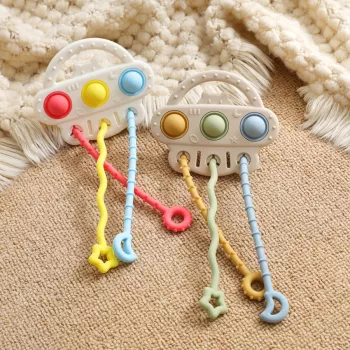
Baby Silicone Teether Toy – BPA-Free Montessori Training & Sensory Activity Play
Teething can be tough on little gums and busy hands. A soft silicone teether that doubles as a sensory activity toy can help soothe discomfort while encouraging early grasping, mouthing, and exploratory play—key building blocks for motor development and independent learning. For more guidance, see The 7 Best Teething Toys of 2023.
For families who prefer simple, screen-free play, a well-designed silicone teether can become a daily go-to: easy to offer during tummy time, quick to rinse after a drop, and comforting during transitions like car rides and errands. For further reading, see Toy Safety Business Guidance | CPSC.gov.
What This Toy Helps With
- Soothes tender gums with a soft, chewable surface designed for repeated mouthing
- Encourages hand-to-mouth coordination, an early skill that supports self-feeding later on
- Supports fine-motor practice through gripping, rotating, and transferring between hands
- Provides sensory input through texture, resistance, and flexible movement
- Offers a simple, screen-free activity option for short stretches at home or on the go
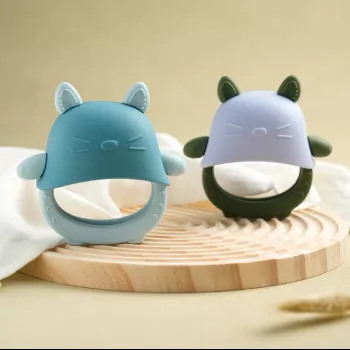
If you’re looking for an everyday option that covers both comfort and play, consider the Baby Silicone Teether Toy – BPA Free, Montessori Training & Sensory Activity Toy, a lightweight piece that fits nicely into diaper-bag routines.
BPA-Free Silicone: What Parents Usually Look For
When choosing a silicone teether, “BPA-free” is often just the starting point. What matters most is how the toy is made, how it holds up, and how confidently it can be kept clean.
- Material transparency: BPA-free claims are most useful when paired with clear care and safety guidance. For background on BPA in food-contact contexts, the FDA provides an overview: Bisphenol A (BPA) in Food Contact Applications.
- Smooth, intact surfaces: Avoid products with cracks, sticky residue, or damage that can trap debris.
- Age-appropriate design: Look for shapes that are easy to grip and do not include small detachable parts.
- Odor check: Silicone should have minimal smell; strong odors can signal residue or poor-quality materials.
- Heat and washing tolerance: Easy-to-clean items are more likely to be used consistently (and that consistency matters during teething weeks).
Montessori-Inspired Play: Simple, Purposeful, Independent
Montessori-inspired baby play doesn’t require a toy shelf full of options. It’s often about offering one safe object and letting baby do the “work” of exploring. A silicone teether fits naturally into this approach because it’s designed for hands and mouth—two of baby’s favorite tools for learning.
- Offer one toy at a time to reduce overwhelm and invite deeper focus.
- Place the teether within reach during tummy time to encourage reaching and grasping.
- Let baby explore freely—mouthing, turning, tapping, and switching hands are all meaningful practice.
- Rotate toys every few days to refresh interest without adding clutter.
- Use short, calm play windows (5–10 minutes) to match early attention spans.
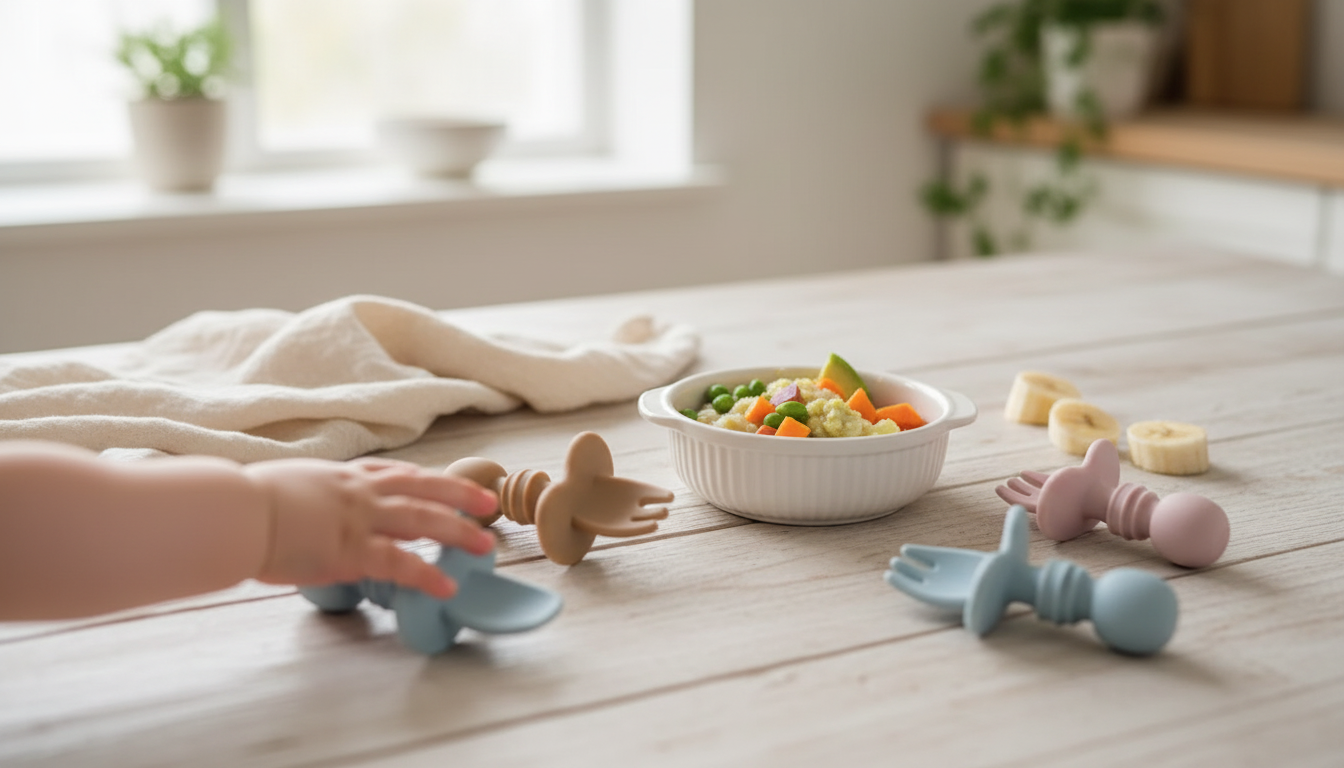
As baby grows, this same “simple object, independent exploration” habit can pair nicely with early feeding routines. For mealtime prep, a coordinated set like the 6PCS Baby Feeding Bowl & Utensil Set can support the next phase—safe, structured practice with utensils—separate from teething play.
Sensory Activity Ideas by Stage
Babies change quickly, so it helps to have a few easy ways to offer the same toy with a slightly different goal. Keep sessions short, follow baby’s cues, and prioritize calm supervision over “perfect” technique.
Quick Guide to Use, Benefits, and Safety Checks
| Activity | Skill Supported | Safety/Comfort Check |
|---|---|---|
| Chilling (briefly) before use | Soothing gums, sensory contrast | Avoid freezing solid; confirm surface is not too cold for baby |
| Midline handoff | Hand-to-hand transfer, coordination | Supervise; stop if baby becomes frustrated or fatigued |
| Tummy-time reach | Shoulder strength, core engagement | Keep within reach; use on a clean, flat surface |
| Texture exploration | Tactile processing, curiosity | Inspect regularly for damage; wash after drops |
| Transition comfort (stroller/car seat) | Self-soothing, routine building | Use only when safely positioned; avoid straps or attachments that pose risks |
Cleaning and Care for Daily Use
If you ever need guidance on sanitizing household surfaces and solutions, the CDC shares practical cleaning information here: Cleaning and Sanitizing with Bleach and Water. Always follow product-specific care instructions for baby items.
When to Use a Teether (and When to Pause)
- Common teething signs include drooling, gum sensitivity, and increased chewing; fever or severe symptoms should be discussed with a pediatrician. The American Academy of Pediatrics offers a helpful overview: AAP: Teething.
- Supervision matters: teethers are for awake, monitored use—not sleep.
- Pause use if baby shows gagging, unusual irritation, or the toy shows visible wear.
- If gum bleeding, persistent rash around the mouth, or feeding changes appear, check in with a healthcare professional.
A Simple Option to Keep in the Diaper Bag
For an easy two-item setup, pair the Baby Silicone Teether Toy – BPA Free, Montessori Training & Sensory Activity Toy with the 6PCS Baby Feeding Bowl & Utensil Set so you have comfort-and-play plus mealtime practice tools ready as baby’s routines evolve.
FAQ
How often should a silicone teether be cleaned?
Clean it before first use, after any drops, and at least daily if it’s used frequently throughout the day. Rinse thoroughly to remove soap residue and let it air-dry fully before storing. Inspect often and replace if you notice tears, thinning, or damage.
Can a baby sleep with a teether?
No—teethers are intended for supervised, awake use. Remove the teether before naps and nighttime sleep and follow safe sleep guidance for your baby’s sleep space.
Is it okay to chill a silicone teether?
Yes, brief chilling can feel soothing on tender gums. Avoid freezing it solid, check the surface temperature before offering it, and supervise during use to ensure your baby stays comfortable.








Leave a comment