Gentle Wooden Baby Brush Set: Soft Wool & Bath Massage

Natural Wooden Baby Hair Brush Set – Soft Wool Massage & Bath Brush
A gentle brush can turn daily hair care into a calming routine—especially for delicate newborn scalps. A natural wooden baby hair brush set that pairs soft wool bristles with a bath-friendly brush helps smooth fine hair, support scalp comfort, and make cleanup after bath time easier. If you’re building a simple, soothing care kit, the Natural Wooden Baby Hair Brush Set – Soft Wool Massage & Bath Brush is an easy staple for everyday grooming and occasional deeper scalp care.
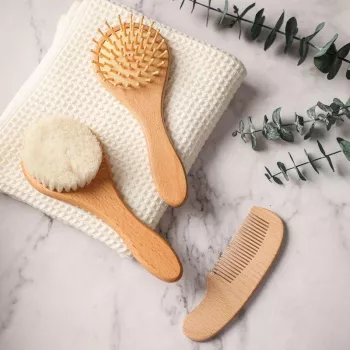
What’s Included and What Each Brush Does
- Soft wool baby brush: designed for light, soothing strokes on sensitive scalps and fine newborn hair.
- Massage/bath brush: intended for use during or after bathing to help lift loosened flakes and rinse away product or oil more easily.
- Wooden handles: easy to grip with one hand while supporting baby’s head with the other.
- Best use cases: everyday grooming, calming bedtime routines, and gentle scalp care when dryness or flaking shows up.
Many families keep the wool brush at the changing station for quick touch-ups and reserve the bath brush for bath nights—when warm water naturally softens the scalp and makes any residue easier to remove.
Why Soft Brushing Helps Baby Scalp Comfort
- Smoother-looking hair: gentle brushing can redistribute natural scalp oils along the hair, helping hair look less flyaway.
- A calming sensory cue: light scalp stimulation may support relaxation as part of a consistent routine, especially with slow, repetitive strokes.
- Gentler flake removal: for mild flaking, brushing after softening the scalp (for example, after bath time) can help remove loosened flakes without scraping.
- Lower irritation risk: soft bristles reduce the chance of irritation compared with stiff bristles, especially around tender areas.
If you’re dealing with cradle cap (infant seborrheic dermatitis), gentle approaches are typically recommended before anything aggressive. Helpful overviews include guidance from American Academy of Pediatrics (HealthyChildren.org) and the NHS cradle cap page.
How to Use the Brush Set (Daily Grooming and Bath Time)
1) Dry hair grooming (fast daily routine)
- Use short, feather-light strokes from crown to nape; avoid pressing down on the scalp.
- Support baby’s head with your free hand, especially for newborns with limited head control.
- If baby has very fine hair, fewer strokes are usually better—aim for comfort, not “perfect hair.”
2) After bath smoothing (when hair is damp)
- Pat hair damp (not dripping) and brush gently to detangle fine strands and smooth the hairline.
- Work from the top down; if you meet resistance, lighten pressure rather than pulling through.
3) Gentle support for flaking
- Soften first with warm water during bath time; brush in small sections.
- Rinse and pat dry—avoid picking at flakes with fingernails.
- If using baby-safe oil: apply a small amount, let it sit briefly, then brush gently and wash out with a mild baby shampoo if needed (follow pediatric guidance for persistent cradle cap).
- Stop if baby shows discomfort, redness increases, or the scalp looks broken or weepy.
Care and Cleaning for a Wooden Baby Brush
- After use: remove loose hair; wipe bristles with a clean, slightly damp cloth.
- Deeper clean (as needed): use a drop of mild soap in lukewarm water; avoid soaking the wooden handle; rinse bristles lightly and towel-dry.
- Drying: air-dry with bristles facing down or sideways to prevent water from pooling at the base.
- Storage: keep in a dry, ventilated place; avoid leaving in a steamy bathroom for long periods.
- Replace if: bristles shed excessively, there’s a moldy odor, or the brush develops rough edges that could scratch skin.
Wooden tools last longest when they’re kept dry between uses. If you use the bath brush during bathing, give it extra time to fully air-dry before storing it in a closed container.
Quick Comparison: Wool Brush vs Bath/Massage Brush
- Choose the wool brush for: newborn grooming, soothing touch, smoothing fine hair, and gentle daily routines.
- Choose the bath/massage brush for: use during bathing, helping lift softened flakes, and cleaning product residue.
- Most families use both: wool brush for daily calming care; bath brush for weekly deeper scalp care when needed.
| Brush type | Best time to use | Primary benefit | Tips |
|---|---|---|---|
| Soft wool brush | After naps, bedtime, morning grooming | Gentle smoothing and calming scalp touch | Use light pressure; brush with the hair growth direction |
| Massage/bath brush | During bath or right after | Helps remove loosened flakes and rinse residue | Soften scalp first; avoid scrubbing or circular friction on irritated spots |
When to Check with a Pediatrician
If you’d like a clinical overview of what’s normal vs. what needs treatment, the Cleveland Clinic cradle cap guide is a helpful reference for common signs and typical care steps.
A Simple Routine for Calm, Clean, and Tangle-Free Hair
To round out a practical baby-care setup, pair grooming essentials with easy mealtime tools like the 6PCS Baby Feeding Bowl & Utensil Set for a tidy, day-to-day routine.
FAQ
Is a soft wool baby brush safe for newborns?
Yes, gentle, light-pressure brushing is generally appropriate for newborn grooming. Avoid pressing on sensitive areas and stop if you notice irritation, increased redness, or baby seems uncomfortable.
Can this help with cradle cap?
It can help lift flakes after they’ve been softened with warm water during a bath (or a small amount of baby-safe oil if your pediatrician agrees). The key is gentle brushing—never scraping the skin—and checking with a pediatrician if symptoms are severe or don’t improve.
How should a wooden baby brush be cleaned?
Wipe bristles after use and do an occasional mild-soap clean with lukewarm water while avoiding soaking the wooden handle. Rinse the bristles lightly and air-dry thoroughly to help prevent odor or mold.








Leave a comment