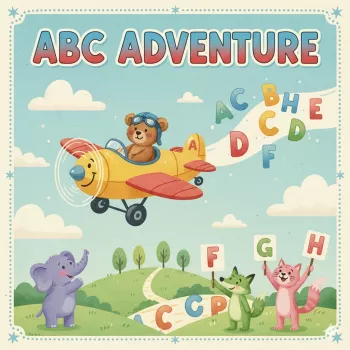
ABC Adventure: Play-Based Letter Learning for Parents

ABC Adventure Checklist for Parents: Fun, Play-Based Letter Learning at Home
A simple, repeatable routine helps children connect letters to sounds and real-life meaning. This ABC Adventure checklist turns everyday moments—meals, errands, playtime, and stories—into low-pressure letter practice that supports early literacy without worksheets or battles. The goal isn’t perfect performance; it’s steady, joyful exposure that builds confidence over time.
What Makes Letter Learning Stick for Young Children
Young kids learn best when letters show up in ways they can see, hear, touch, and use—especially inside routines that already feel safe and familiar.
- Keep it multisensory: seeing, saying, moving, and touching letters supports stronger recall.
- Prioritize sound awareness: matching a letter to its most common sound is often more useful than naming the letter alone.
- Aim for short and frequent: 5–10 minutes daily typically beats a long weekly session.
- Use meaningful context: connect letters to the child’s name, favorite foods, animals, and places.
- Celebrate effort, not perfection: confidence and curiosity matter more than “getting it right” every time.
Play-based learning is widely supported in early childhood guidance, including NAEYC’s Developmentally Appropriate Practice. For sound play (a key pre-reading skill), Reading Rockets’ overview of phonological and phonemic awareness is a helpful parent-friendly reference.
The ABC Adventure Checklist: A Parent-Friendly Routine
This routine is designed to be repeatable, flexible, and easy to fit into real life. Pick just a couple steps per day and stop while it’s still fun.
- Choose today’s focus: one letter (or two) and one sound to listen for during play.
- Set a “letter hunt” target: find the letter on signs, packaging, books, or toys.
- Do one build-and-touch activity: form the letter with blocks, play dough, pipe cleaners, or finger tracing in sand/salt.
- Do one say-and-hear activity: practice the sound at the start of words (e.g., /m/ in milk, moon).
- Add a story connection: pick a short book and point out the focus letter on the cover or a favorite page.
- End with a quick win: child chooses a sticker, stamps the letter, or circles it on a simple page—then stop.
If you want an easy, ready-to-use version of this routine, ABC Adventure – Checklist for Parents | The Best Way to Help Child Learn Letters Through Fun and Play is a printable/digital option that keeps the steps in one place so you can repeat the same flow without planning from scratch.
Play Ideas by Setting: Turn Daily Life Into Letter Time
Letter practice gets easier when it “rides along” with something you already do. Try one idea, then rotate to keep it fresh.
Kitchen
- Use letter magnets on the fridge for quick matching and building.
- Play “sound chef”: pick today’s sound and find foods that start with it (milk, muffin, mango for /m/).
- During snack, point to a package letter and say, “This is M. It can say /m/ like milk.”
Bath time
- Foam letters become “splash the letter” targets when you call one out.
- Trace letter shapes on a foggy mirror with a fingertip.
- Use a washcloth to “erase” and redraw—kids love the reset.
Car rides
- Spot letters on license plates and store signs.
- Play “I spy a letter…” and let your child be the caller once they’re ready.
- Keep it light: one or two finds is plenty before switching back to music.
Outdoor play
- Write chalk letters on the sidewalk and do letter hopscotch.
- Collect sticks/leaves to build the letter shape on the ground.
- “Sound walk”: listen for words that start with the focus sound (sun, swing, slide for /s/).
Shopping
A Weekly ABC Adventure Plan (Mix-and-Match)
| Day | Focus | Quick Activity (5–10 min) | Everyday Add-On |
|---|---|---|---|
| Day 1 | Letter name + shape | Build the letter with play dough or blocks | Find it on a cereal box |
| Day 2 | Letter sound | Sound basket: collect 3 items that start with the sound | Say the sound when opening doors/drawers |
| Day 3 | Uppercase/lowercase match | Match pairs with homemade cards | Spot both forms on signs/books |
| Day 4 | Fine-motor writing prep | Trace with finger in salt/sand tray | Draw the letter with water on pavement |
| Day 5 | Listening game | Clap when hearing the sound in a word list | Listen for the sound during story time |
| Day 6 | Letter hunt | Scavenger hunt around the home | Take a photo of the letter “in the wild” |
| Day 7 | Review + choice | Child picks favorite activity to repeat | Point out the letter in a bedtime book |
Common Challenges (and What to Do Instead)
For more general routine and behavior support, CDC Positive Parenting Tips offers practical guidance that pairs well with short, predictable learning moments.
Using the ABC Adventure Checklist Product at Home
- ABC Adventure – Checklist for Parents | The Best Way to Help Child Learn Letters Through Fun and Play
- Preschool Drop-Off Survival Checklist | Morning Routine Guide | Printable Digital Download for Parents | Smooth School Transition Tips
FAQ
What age is best to start letter activities?
Many children enjoy playful letter exposure around ages 2–3, while more consistent recognition and sound matching often grows between 3–5. Keep sessions short, follow interest, and treat it like play rather than a test.
Should a child learn letter sounds or letter names first?
Learning both through play works well: letter sounds support reading later, and letter names help kids talk about letters. Pair each letter with a simple keyword (M—moon—/m/) to connect the name, shape, and sound.
How long should daily letter practice be?
A planned 5–10 minutes is usually plenty, plus quick “letter moments” during the day (a sign, a cereal box, a book cover). Stopping while it’s still fun makes kids more likely to want to do it again tomorrow.









Leave a comment